Monday, July 28, 2014

Do You Know Why We See Snow as White?

A savant's story reveals the complexity of snowflakes and the simplicity of snow.

By Daniel Tammet from Thinking in Numbers 


Outside it is cold, cold. Ten degrees below give or take. I step out with my coat zipped up to my chin and my feet encased in heavy rubber boots. The glittering street is empty; the wool-gray sky is low. Under my scarf and gloves and thermals I can feel my pulse begin to make a racket. I do not care. I wait.

A week before, the trees’ bare branches stood clean against blue sky. Now the sight of falling snowflakes makes me shiver; it fills the space in my head that is devoted to wonder. How beautiful they are, I think. When will they stop? In an hour? A day? A month?

The neighbors, who’ve lived in Ottawa far longer than I, tell me they have not seen this snowfall’s like in a generation. Shovels in hand, they dig paths from their garage doors out to the road. The older men affect expressions of both nonchalance and annoyance, but soon faint smiles form at the corners of their wind-chapped mouths.

Granted, it is exhausting to trudge to the shops. Every step seems to take an age. Hot under my onion layers of clothing, I carry a shirtful of perspiration back into the house. Wet socks unpeel like plasters from my feet; the warm air smarts my skin. Later, around a table, in the dusk of a candlelit supper, my friends and I exchange recollections of winters past. We talk sleds and toboggans and fierce snowball fights. I recall a childhood memory from London: the first time I heard the sound of falling snow.

“What did it sound like?” the evening’s host asks me.

“It sounded like someone slowly rubbing his hands together.”

Yes, my friends say, laughing. Yes, we can hear what you mean.

One man laughs louder than the others. I do not catch his name; he is not a regular guest. I gather he is some kind of scientist.

“Do you know why we see snow as white?” he asks. “It is all to do with how the sides of the snowflakes reflect light.” All the colors in the spectrum, he explains to us, scatter out from the snow in roughly equal proportions, which we perceive as whiteness.

Now our host’s wife has a question. “Could the colors never come out in a different proportion?”
“Sometimes, if the snow is very deep,” he answers. In which case, the light that comes back to us can appear tinged with blue. “And sometimes a snowflake’s structure will resemble that of a diamond,” he continues. Light entering these flakes becomes so mangled as to dispense a rainbow of multicolored sparkles.

“Is it true that no two snowflakes are alike?” This question comes from the host’s teenage daughter.

It is true. Every snowflake has a basic six-sided structure, he says, but its spiraling descent sculpts each in a unique way: The minutest variations in air temperature or moisture make all the difference.

Still, researchers classify snowflakes by size, shape, and symmetry. For example, some snowflakes are flat and have broad arms, resembling stars, so that meteorologists speak of stellar plates, while those with deep ridges are called sectored plates. Branchy flakes, like those in Christmas decorations, go by the term stellar dendrites—from the Greek word for tree.

Sometimes snowflakes fall as columns of ice, which are called needles. Some, like conjoined twins, show 12 sides instead of the usual six, while others resemble bullets. Other possible shapes include the cup, the sheath, and arrowhead twins.

We listen wordlessly to the scientist’s explanations. Our rapt attention flatters him. His white hands, as he speaks, draw the shape of every snowflake in the air.

That night, the snow reaches into my dreams. My warm bed offers no protection from my childhood memories of the cold. I dream of a distant winter in my parents’ garden: The powdery snow, freshly fallen, was like sugar to my younger brothers and sisters, who hastened outside with shrieks of delight. I hesitated to join them, preferring to watch from the safety of my bedroom window. But later, after they had all wound up their games and headed back in, I ventured out alone and started to pack the snow. Like the Inuit (who call it igluksaq—house-building material), I wanted to build myself a shelter. The crunching snow gradually encircled me, the walls rising higher until at last they covered me completely. My boyish face and hands smeared with snow, I crouched deep inside feeling sad and feeling safe.

In the morning, my friends call up to my room. “We are ready and waiting!” I am the English slowpoke, unaccustomed to this freezing climate, to the lethargy it imposes on the body.
London’s wet slush was quick to blacken, but here the snow is incandescent white. Canadians have no fear of winter. Stockpiling milk and bread is unheard-of. Traffic jams, canceled meetings, and energy blackouts are rare. The faces that greet me downstairs are smiling. They know that the roads will have been salted, that their letters and parcels will arrive on time, that the shops will be open.

In the schools of Ottawa, children extract snowflakes from white sheets of paper. They fold the crisp sheet to an oblong, and the oblong to a square, and the square to a right-angled triangle. With scissors, they snip the triangle on all sides; every pupil folds and snips the paper in his own way. When they unfold the paper, different snowflakes appear, as many as there are children. But every one has something in common: They are all symmetrical. Shorn of nature’s imperfections, the children’s flakes represent an ideal.

At the University of Wisconsin, mathematician David Griffeath has improved on the children’s game by modeling snowflakes on a computer. In 2008, Griffeath and his colleague Janko Gravner produced an algorithm that mimics the many physical principles that underlie how snowflakes form. The project proved slow and painstaking. It can take up to a day for the algorithm to perform the hundreds of thousands of calculations necessary for a single flake. Parameters were set and reset to make the simulations as lifelike as possible. But the end results were extraordinary. On the mathematicians’ computer screen shimmered a galaxy of three-dimensional snowflakes: elaborate, finely ridged stellar dendrites and 12-branched stars, needles, prisms of every known configuration, and others resembling butterfly wings, which no one had identified before.

My friends take me on a trek through the forest, where flakes fall intermittently and sunlight glistens on hillocks of snow. We tread slowly, rhythmically, across the shifting surfaces, which squirm and squeak under our boots.

Whenever snow falls, people look at things and suddenly see them. Lampposts and doorsteps and tree stumps and telephone lines take on a whole new aspect. We notice what they are and not simply what they represent. Their curves, angles, and repetitions command our attention. Visitors to the forest stop and stare at the geometry of branches, of fences, of trisecting paths. They shake their heads in silent admiration.

A voice somewhere says the river Hull has frozen over. I disguise my excitement as a question. “Shall we go?” I ask my friends. For where there is ice, there are inevitably skaters, and where there are skaters, there is laughter and lightheartedness and stalls selling hot pastries and spiced wine. We go.

The frozen river brims with action: Parkas pirouette, wet dogs give chase, and customers line up in queues. The air smells of cinnamon. Everywhere, the snow is on people’s lips: It serves as the icebreaker for every conversation. Nobody stands still as they are talking; they shift their weight from leg to leg, stamp their feet, wiggle their noses, and exaggerate their blinks.

The flakes fall heavier, whirling in the wind. Human noises evaporate; now nobody moves.
Snow comes to earth and forms snow lampposts, snow trees, snow cars, snowmen. Nothing is indifferent to its touch. New worlds appear and disappear, leaving their prints upon our imagination.
Daniel Tammet was diagnosed with autistic savant syndrome at the age of 24. He has subsequently written bestselling books about mathematics, neuroscience, and living with Asperger’s syndrome.

Friday, July 25, 2014

Washing Clothes


One young man went to apply for a managerial position in a big company. He passed the initial interview, and now would meet the director for the final interview.

The director discovered from his CV that the youth's academic achievements were excellent. He asked, "Did you obtain any scholarships in school?" the youth answered "no".  " Was it your father who paid for your school fees?"

"My father passed away when I was one year old, it was my mother who paid for my school fees.” he replied.  "Where did your mother work?" "My mother worked as clothes cleaner.” The director requested the youth to show his hands. The youth showed a pair of hands that were smooth and perfect.  "Have you ever helped your mother wash the clothes before?" "Never, my mother always wanted me to study and read more books. Besides, my mother can wash clothes faster than me.

The director said, "I have a request. When you go home today, go and clean your mother's hands, and then see me tomorrow morning.

The youth felt that his chance of landing the job was high. When he went back home, he asked his mother to let him clean her hands. His mother felt strange, happy but with mixed feelings, she showed her hands to her son.

The youth cleaned his mother's hands slowly. His tear fell as he did that. It was the first time he noticed that his mother's hands were so wrinkled, and there were so many bruises in her hands. Some bruises were so painful that his mother winced when he touched it.

This was the first time the youth realized that it was this pair of hands that washed the clothes everyday to enable him to pay the school fees. The bruises in the mother's hands were the price that the mother had to pay for his education, his school activities and his future.

After cleaning his mother hands, the youth quietly washed all the remaining clothes for his mother. That night, mother and son talked for a very long time.

Next morning, the youth went to the director's office.  The Director noticed the tears in the youth's eyes, when he asked: "Can you tell me what have you done and learned yesterday in your house?" The youth answered, "I cleaned my mother's hand, and also finished cleaning all the remaining clothes' “I know now what appreciation is. Without my mother, I would not be who I am today. By helping my mother, only now do I realize how difficult and tough it is to get something done on your own. And I have come to appreciate the importance and value of helping one’s family.

The director said, "This is what I am looking for in a manager. I want to recruit a person who can appreciate the help of others, a person who knows the sufferings of others to get things done, and a person who would not put money as his only goal in life.”  “You are hired.”

This young person worked very hard, and received the respect of his subordinates. Every employee worked diligently and worked as a team. The company's performance improved tremendously.

A child, who has been protected and habitually given whatever he wanted, would develop an "entitlement mentality" and would always put himself first. He would be ignorant of his parent's efforts. When he starts work, he assumes that every person must listen to him, and when he becomes a manager, he would never know the sufferings of his employees and would always blame others. For this kind of people, who may be good academically, they may be successful for a while, but eventually they would not feel a sense of achievement. They will grumble and be full of hatred and fight for more. If we are this kind of protective parents, are we really showing love or are we destroying our children instead?

You can let your child live in a big house, eat a good meal, learn piano, watch on a big screen TV. But when you are cutting grass, please let them experience it. After a meal, let them wash their plates and bowls together with their brothers and sisters. It is not because you do not have money to hire a maid, but it is because you want to love them in a right way. You want them to understand, no matter how rich their parents are, one day their hair will grow gray, same as the mother of that young person. The most important thing is your child learns how to appreciate the effort and experience the difficulty


I Am Diversity, Please Include Me

By: Charles Bennefield

I Am Diversity, Please Include Me
I‘m present in every place you go
Depending on your lens I’m friend or foe
I’m a force to be reckoned with
Like the winds of change I move. I’m swift.
I’m present when two or more are together
If embraced I can make the good even better.
I’m not limited to age, gender, or race.
I’m invisible at times and yet all over the place.
Don’t exclude me due to a lack of knowledge
Welcome me like the recruit fresh out of college.
Let me take my seat at the table
Even though I may be differently able
My experience, my passion the authentic me
Can help add value for your company.
Learn about me; improve my underrepresentation
And I can provide a competitive edge to your entire nation.
I exclude no one I am strengthened by all
My name is Diversity and yes I stand tall.
Recognize me and keep me in the mix
Together there’s no problem that we can’t fix.
I am your best hope towards true innovation
And to many, I reflect hope and inspiration.
Your lives and companies will continue to change
Thus the need for Diversity and Inclusion will also remain.
Do all that you can to truly embrace me
And experience life’s fullness totally
I’m the thought lurking behind the unfamiliar face
I’m the ingenuity that helps your team win the race.
I’m the solution that came from the odd question that was asked.
I stand out in the crowd when I, Diversity, am allowed to be unmasked.
I’m diversity embrace me and we’ll journey far.
I’m Diversity include me and we will reach the shining star.
Coupled with Inclusion our lights burn longer
Together we are smarter, better and stronger
I am Diversity
Yes, that’s me

 Submitted by Bill Kerzman, PATH PQI Director


Monday, July 21, 2014

A poem composed by Brandy, age 15, for her foster parent

Sometimes I know the words to say
Give thanks for all you've done
But then they fly up and away
As quickly as they come.

How could I possibly thank you enough?
The one who makes me feel whole
The one to whom I should owe my life
The forming of a brand new soul.

The one who's there at nights
The one who helps me when I'm crying
The one who's continuously an expert
At picking up when I was lying.

The one who sees me off to school
And spent the days alone
Yet magically produced a smile
As soon as I came home.

The one who always makes sacrifices
To always put us first
Who lets me test my broken wings
In spite of how its hurts.

What way is there to thank you?
For your heart, your sweat, your tears
For the ten thousand things you've done
For oh-so many years.

For changing with me as I changed
For accepting all my flaws
For not loving cause you had to
But loving just because.

Thank you for the gifts you give
For everything you do
But thank you most of all
For making my dreams come true!!


Tuesday, July 8, 2014

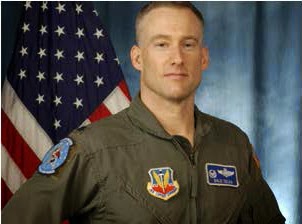
The Stranger Who Changed My Life: My Enemy, My Friend

From the moment Serbian missile Commander Zoltan Dani shot down U.S. fighter pilot Dale Zelko's plane, the two were tangled in a complicated relationship of life and death.

By Dale Zelko


As soon as you leave Belgrade, you’re transported back in time. The Serbian capital is a modern metropolis, but in the countryside, donkeys still clop along cobblestones, past farmers taking their produce to market.

I was here visiting a baker, Zoltan Dani, in 2011. The bakery, in the town of Skorenovac, is in a timeworn building next to the house where Zoltan grew up. When I walked in, I found him, covered in flour and wearing a baker’s hat and apron, stretching dough on a large table. He smiled and hustled over to greet me. I saluted him, stopping him in his tracks. He returned my salute, then we hugged. It could not have felt more natural. He was like my brother, this man who had tried to kill me 12 years earlier.

Back then I was an F-117 Stealth Fighter pilot during the first week of the Serbian conflict. The year was 1999. My mission: Bomb the most heavily defended, high-value targets deep in enemy territory. It was a terrifying job. I knew that the people on the other side of the war felt the same. But I couldn’t afford to think about them. I tried to think of my targets as just concrete and steel, with no personal attachment, no human element. That was my survival mechanism.
And it worked. The first night of the war, I had two targets and hit both. I flew on the third night, which was also successful. My target on the fourth night was number one on the strategic target list. The entire route was defended with heat-seeking missiles, radar-guided missiles, antiaircraft guns—a full array of nasty stuff.

Stealth technology is not invisible technology. It just makes it harder for an aircraft to be detected. So on that fourth night, before entering Serbian airspace, I did a stealth check. I turned off lights, brought in antennae, and turned off the radio and transponder—any kind of emitter or transmitter that might give away my position. On that fourth night, I was coming up to the border, just waiting until the last moment to turn the radio off, desperate for that call: We figured it out peacefully. You can return to base. I didn’t get that radio call.

I flew into Serbia, hit my target, and began my return back to the base in Italy. I didn’t see the two SA3 missiles until they punched through the cloud cover.

The missiles were moving at three times the speed of sound, so there wasn’t much time to react. Just before the first missile reached me, I closed my eyes and turned my head, anticipating the impact. I knew there would be a fireball, and I didn’t want to be blinded. I felt the first one go right over me, so close that it rocked the aircraft. Then I opened my eyes and turned my head, and there was the other missile. The impact was violent. A huge flash of light and heat engulfed my plane and blew off the left wing, sending the plane into a roll.

If you’re in an airplane that hits some turbulence and you feel a little light in your feet, you’re momentarily in zero g’s. I was at negative seven g’s. My body was being pulled out of the seat upward toward the canopy. As I strained to reach the ejection handles, one thought crossed my mind: This is really, really, really bad.

From the moment I pulled the ejection handles to being under a fully inflated parachute took 1.5 seconds. I made radio contact with Air Force search-and-rescue teams, then, as I floated down to earth, watched my plane crash in a farm field. I landed a mile from there. The Serbs immediately flooded the area looking for me. At one point, they were within a couple of hundred yards of where I was hiding in an irrigation ditch separating two farm fields. My gear was under the dark-green life raft from my survival equipment. Eight hours later, an American helicopter came and got me. I would later learn that I had been minutes away from being captured.

Through it all, from my fall to the long hours waiting in the field, I thought about the Serbian surface-to-air missile operator who’d shot me down. I imagined so vividly standing next to him, enjoying his company, and saying to him, “Really nice shot.”

Twelve years later, I got the opportunity to tell him in person. I’d retired from active duty in 2006 and worked for the Air Force as a civilian in New Hampshire, where I’d moved with my family. It was there that I got an e-mail from a Serbian documentary filmmaker, Zeljko Mirkovic, asking if I’d like to return to Serbia and meet Zoltan Dani, the man who’d shot me down. He wanted to make a film about the reunion.

I was eager to meet Zoltan. I’d become consumed by the idea of meeting him, not as an adversary but as a friend. I needed to explore the possibilities of reconciliation. So I said yes to Zeljko. I had, however, one big concern: The first time I was in Serbia, I was dropping bombs. How would I be received now?

After the war, Zoltan retired from the Serbian army and learned to bake the thin sheets of phyllo dough used for flaky pastries. Making phyllo is hard. When Zoltan works, it’s an art. He stretches the dough, then casts it into the air, deftly snaring it, and splaying it out on the table in one motion. He then stretches it again until it’s paper-thin.

At his bakery, he gave me an apron and a hat and put me to work. I was pretty good at kneading and stretching the dough, but my downfall came in tossing the dough into the air: Each time I tried, it ripped. I went through a lot of dough that day.

But Zoltan didn’t care. He made me feel comfortable. At one point, I noticed he had flour on his face. Without giving it a second thought, I reached over and wiped it off.

When my lesson was over and I’d cleaned up, I told Zoltan I wanted to see the field where I’d hidden. Followed by Zeljko’s film crew, we drove to it. Amazingly, I found the irrigation ditch where I’d spent those eight grueling hours. I even met the farmers who were working the field. Any fears I had about being treated like an enemy combatant were quickly eased. Turns out I was a local hero. The downing of my Stealth Fighter had been the biggest thing to happen in that area.
Back at Zoltan’s home, where my host insisted I take over his son’s room, I presented gifts to the Dani family. I’d brought baseballs and baseball gloves for the kids and a model of an F-117 for Zoltan. He had blown up a real one—I figured he needed a model of it. My wife, Lauren, had made a quilt for Zoltan’s wife, Iren, as a symbol of peace. The last gift was from one of my four children, Kegan, then nine, who was learning the violin. I had recorded him playing a Serbian tune called “Svilen Konac,” or “Silk Thread.” It was beautiful.

Zoltan and I began to get to know each other. I discovered he was a gentle, tenderhearted soul, a man of faith who, like me, held his family near and dear. And, of course, we discussed “that” day.
Zoltan was 43 and I was 40 on the night he shot me down. He said that anytime his crew emitted their tracking radar longer than 20 seconds, they would shut down and move because that would be long enough for the enemy—us—to figure out their location. And if they did it twice, they wouldn’t try again; it was too dangerous. But that night, Zoltan had a feeling. He went for a third try, and it paid off. They accomplished what no one had ever done before—they shot down a Stealth Fighter.
After a few days, we parted ways, vowing to keep in touch. And, indeed, the next year, 2012, Zoltan and his family came to New Hampshire for a week. Zeljko came, as well, and filmed the visit. But we barely noticed the cameras. We were friends spending time with each other. Iren presented us with a crocheted lace tablecloth, an heirloom that had been in their family for 50 years. And Zoltan gave me a handcrafted model of an SA3 missile.

“You know what this is, right?” he said, grinning.

I laughed. “Yeah, and I remember what it feels like too.”

I returned to Serbia in 2012 for the premiere of Zeljko’s movie, The Second Meeting. During questions after the screening, one woman said to me, “When you were shot down, I celebrated. I cheered with my friends. But we were upset that you were not killed. We thought you deserved to die.” You can imagine the hush in the audience. And then she said, “But now that we have gotten to know you, I’m so glad that you are here.” I was weeping.

There’s so much misunderstanding in the world resulting in unnecessary sorrow. Having the Danis—a positive, joyful family—in my life has altered my perspective. It may sound trite, but if only there were a way for all the religious, cultural, and ethnic groups of the world to meet and get to know one another in a meaningful way—the way Zoltan and I have—how could we ever go to war again?

Project 1:17

Written By: Kelsey Remmel, PATH Social Worker

It all started with two friends discussing two things over a cup of coffee one day: at any given time there are around 50 kids on the statewide list for PATH and there is an ongoing need for foster homes to serve the youth in foster care. From there a few more conversations took place about the need and before anyone truly realized what was happening, Project 1:17 began to form.

Project 1:17 is a group of foster and adoptive parents, as well as some concerned community members, who are dedicated to educating community members about the ongoing need for foster and adoptive homes. The group members have created a wonderful video that details the number of youth in foster care, why there is a need for foster homes, and what individuals/families can do to help. It was decided that Project 1:17 would target getting information out about the need for foster homes during the month of May as May is National Foster Care month. Group members partnered with churches in the Fargo-West Fargo area during May to raise awareness by showing the video during church services. As a follow up to group members efforts in partnering with area churches, Cass County, Lutheran Social Services, AASK, and PATH have collaborated with Project 1:17 to hold informational meetings for individuals interested in learning more about how to become involved in foster and/or adoptive care.

The group has set a goal of recruiting 117 new foster homes in 2014. Not only is Project 1:17 determined to recruit new foster parents in the near future; they are hoping to turn Project 1:17 into an ongoing education and recruitment effort. The hope is that Project 1:17 will continue its efforts of educating the public on the need for foster and adoptive homes by partnering with churches throughout the year and years to come with the ultimate goal of Project 1:17 one day becoming a Non-Profit Organization that is dedicated to educating the public on the need for foster homes. Plans are already in the works to partner with more churches in the next few months before AASK’s informational meeting in August to hopefully recruit a few more interested community members to the meeting!

I would like to personally acknowledge and thank each and every individual who has had a part in creating Project 1:17. The hard work and dedication each individual has displayed in trying to recruit new foster and adoptive homes, as well as simply get information out to the public about the need, is absolutely wonderful to see. I want to give a personal thank you to Nate Safe, PATH Foster Parent in Fargo, who was the catalyst behind this group forming. It was Nate who took the information about the need for foster homes to some of his friends and family and did the leg work in getting this group formed. I am truly grateful that I have been able to be a part of watching this group form and grow. It has been a joy working with Project 1:17 and amazing to watch the passion each group member has for this cause. Hopefully it will continue to grow and one day meets the hopes of becoming an organization!

See their vimeo video here: https://vimeo.com/95903894

Wednesday, May 28, 2014

Dedicated to our PATH Foster Parents


Although you’re not their parent,
We place them in your home.
You care for them each day,
And take them as your own.
You cuddle, sing, and read to them
And watch them as they play.
We see so many accomplishments,
As you help them grow each day.
You understand their language,
You know what’s in their heart.
We’re so proud of your commitment to them
Something we hoped from the start.
No, you may not be their parent,
But your role is just as strong.
You nurture them and keep them safe,
Even though it may not be for long.
Some days the children come, 
And some days you and they will part.
But we know each child we placed with you will be
 FOREVER IN YOUR HEART!
For each one of you put in tears and laughter hours upon hours,
It wasn’t just the children who needed you.
Which is why the gratitude is also ours!

Friday, May 23, 2014

20th Anniversary Article

By: Jodi Duttenhefer

1994.  20 years ago.  Some of the events from that year will be forever remembered….
*North American Free Trade Agreement (NAFTA) goes into effect.
*Nancy Kerrigan is attacked by Tonya Harding’s bodyguard.
*Former President Richard Nixon dies.
*Nelson Mandela becomes 1st black president in South Africa.
        *OJ Simpson is arrested for murdering his wife and another man after a car chase that was televised live.

Here in North Dakota, in 1994, PATH was born!  A minor event compared to some of those mentioned above, but a major event in the lives of thousands of youth over the last 20 years.  In 1994, PATH ND had 26 youth in care. For the year ending June 30, 2013, PATH served just over 1300 youth from North Dakota across all of its programs!  As of that same date, PATH had 420 foster homes totaling 673 individual foster parents.

 PATH is a private non-profit child and family services agency. The agency has roots starting in 1972 in Minnesota, extending into North Dakota in 1994 when it blended with the North Dakota Therapeutic Foster Care program. The organization is governed by a board of directors, which includes members of the professional community as well as elected PATH foster parents. On July 1, 2011, PATH ND, Inc. became the governing entity over all PATH programs and corporations.
The mission statement of PATH is “Families Making the Difference.”

PATH is licensed as a child placing agency by the North Dakota Department of Human Services, and accredited by the Council on Accreditation for Services to Children and Families (COA).
PATH has grown and developed an array of family services with its two largest being Treatment Foster Care (TFC) and Family Support and Family Based Services (FS).  PATH continues to search for other areas in the nation where our agency resources may assist in service provision relevant to any individual state service area. PATH is uniquely structured to offer corporate supports and services where ever they may be needed.

Since its inception, PATH ND has sought to serve children in the least restrictive setting possible, while still bringing the needed services to the child. Our programs are designed to provide extra supports and foster parent training to allow children and youth with treatment needs to have the security and normalcy of a family home, while receiving the services to help them address personal challenges and difficult family backgrounds.

PATH currently has offices in Fargo, Grand Forks, Jamestown, Devils Lake, Belcourt, Bismarck, Dickinson, Minot, and Williston.  Out of those nine offices, PATH is able to serve the entire state of North Dakota.

The outcomes for these youth are nothing short of amazing.  73% of the youth in PATH leaving Treatment Foster Care are returned to less restrictive settings.  This is above the national average.
While PATH is doing an excellent job serving youth, there are still youth from across the state that PATH is not able to serve, largely due to the need for more foster homes.  These youth are remaining in residential care facilities until homes open, or they are being sent out of state, meaning they are away from their families and home communities.

Our area continues to have a huge need for people to provide this service to children and families in our area.  We encourage all adults age 21 and older to consider becoming foster parents and take the time to think about if this is an option for them.  You do not have to own your own home, be married, or have your own children to provide foster care.  There is no age limit on foster parents and children can benefit from foster parents of all ages.  While full-time foster parents are very much needed we are also in need of foster parents to provide respite care, these foster parents provide care on a part time basis to other foster families who may need a break, be going out of town, or who are attending training.

Finally, we would like to send out a huge THANK YOU to those people who are foster parents!  May is Foster Care Month so we encourage all of you to thank those foster parents in your communities.

If you have room in your heart and home please consider providing foster care to these youth. PATH can be contacted at 877-766-PATH.  Thank you for considering this much needed service in our community.

Tuesday, April 15, 2014

Who do you belong to?

By: Katie Krukenberg

“Who do you belong to?” asked the wedding photographer, to our 19 year foster son. He was wearing his tux, ready for his duty as usher at my sister’s wedding, and the photographer was trying to line up my parents and siblings for one big family photo. He just looked back at her – someone who didn't know him well might not have seen the very brief moment of insecurity that crossed his face, and then disappeared just as quickly. “He’s ours,” I said. His eyes met mine for just a second, he smiled, and she directed him into place between my husband, me, and our two young children. He smile is radiant in every one of the many pictures he was in that day. 

W* has been a part of our family since he was 14. These have been hard fought years of relationship building and trust earning, and testing it all over and over again. We have gotten to know him over these years – first the surface version that he lets everyone see, and then much more slowly the incredible and complicated rest of him that is there. We've struggled along with him as he has battled his demons with addiction and held him while he cried over life challenges. We've embraced him in his moment of vulnerability when he asked if he could just plan to stay until he was 18…. And again when he asked if he could stay past 18. We have grown to love him. I have watched him love my two small children, whose whole lives he has been a part of, and think that maybe he loves them more fully than he’s ever loved anyone. What started as a placement of a boy into a foster home with people he didn't know and didn't get to choose has become a home and family of a young man who elected to stay, long after he could have left. He became a part of our family by chance; he has stayed a part of it by choice.

Several times our foster care agency has sent out an email asking for success stories to be submitted by foster parents to assist with their recruitment effort. I never felt quite confident enough to submit one, because I don’t yet know W*’s final chapters to know if this whole endeavor will be deemed “successful” or not. I've seen enough evidence so far to know that it won’t be an easy walk for him through the life challenges that will come his way, but we have also committed ourselves to going alongside him so that he’s not making that walk alone. 

And although there have certainly been challenges along the way, there has also been this highlight reel of moments that play through my head when I think back on the last few years; him sitting at our table sharing milk and cookies with our toddler son, making sure the bites were small enough for him and the painstaking way that he tipped the cup so that Tyler could get a sip of milk; my husband helping him tie his necktie before his first winter formal dance; his laughter while sitting around the table playing pinochle with family for hours; the look on his face when he water skis; the gentle way he held my daughter in the hospital the day she was born and the look of awe on his face while she was in his arms; helping him get dressed in his tux for prom; watching him walk across the stage at his graduation; all of the birthdays and holidays and other family celebrations he has been a part of during that time; and most recently, the proud way that he escorted my mom down the aisle as an usher in the wedding and then dancing the night away at the wedding dance. These are the shining moments where I think I've seen him at his very best, and it gives me hope for the rest that are to come.

And perhaps the moment that stands out most to me among all of them was a day last winter when we were all snowed in. W* was playing superheroes with my son, who was in his Superman outfit. Suddenly he disappeared to his bedroom, much to my son’s disappointment. I tried to explain to him that W* had played a long time and probably just needed a break. All of a sudden the door burst open and W* (or Batman) jumped through, with a black shirt and pants on, a blanket tied around his neck, and a bandana with eye-holes cut out tied around his face. I looked at my son who seemed temporarily paralyzed with joy, and the huge smile on W*’s face. In that moment when I got to watch him love my son, I loved him so much it seemed I could feel my heart swell just a bit, and I couldn't help but be thankful for everything leading up to this point to make that moment possible. 

The hardest question that I often get from people when they learn that we are foster parents is, “Aren't you worried about the effects it will have on your own children?” I think this one bothers me the most because, as ashamed as I feel about it, somewhere deep down I DO worry about that sometimes. This summer my four year old son and I were reading a book he had picked out from the library, about a panda bear in a zoo that couldn't have a baby when all of the other animals were. The panda ended up getting an egg from the zookeeper that needed to be hatched, and became a mother to a penguin, or something along those lines. When we finished the story my son said, “That’s kind of like our family, right mom? Because even though you aren't W*’s mom, he’s still my brother, right?” My eyes welled with tears because if my children are going to take anything away from the experience of being a foster family, I couldn't be happier about it being that message: that family is about love, not just matching genetics. Being W*s foster mom has been one of my life’s greatest challenges so far, but far outweighing that is the incredible blessing it has been.

So like I said at the beginning, I don’t know yet know how this story ends and I am not quite bold enough to promise a happy ending. That won’t stop me from hoping for one. But maybe for now it’s enough to call it a success that my family gets one more person to love, and when someone asks him, “Where do you belong?” he knows that the answer is with us.


Sunday, April 6, 2014

Brian and Barb Trauman, Fargo PATH Foster Parents are the 2014 North Dakota Family Based Services Association Provider Award Recipients.


Nomination:  Brian and Barb are PATH foster parents and have provided care to numerous youth in our region.  They are excellent foster parents and provide safe, encouraging and nurturing home to the youth who are placed in their home.

Brian and Barb believe in a permanent loving home for every child and promote this philosophy as they provide care to children living with them.  They welcome contact with birth families and if adoption is the goal, adoptive families as well.  They attend to the needs of the children and welcome the team approach as they work together to wrap services around the child and family as everyone works toward permanency.  They will do whatever is necessary to help children reach personal goals and developmental milestones, always with a caring, supportive spirit.

Brian and Barb are exceptional leaders and advocates for children.  They are well respected in the community as well as among foster parent colleagues and other professionals who have worked with them.  Their insights are respected and valued.

Their motivation is to help children through a supportive environment and work toward the best interests of the children who have been placed in their home.  The Trauman’s continue contact with youth who have aged out of foster care to ensure someone is still “looking out for them”.

They have a heart and a passion for children which provides a valuable resource to our community.
Brian and Barb are great advocates for the children in their home.  They are willing to go the extra mile to ensure children have what they need to be successful.  They have also been mentors to the youth as well as their birth families when they have contact and connections.  They believe in families and do their best to promote these relationships.

The Trauman’s are good members of a professional team.  They seek out services, are willing to provide extra services themselves and have even assisted in finding apartments for youth once they leave their home.  They make lifelong commitments to the youth who have been in their home and truly show the unconditional love every child deserves.

CONGRATULATIONS, BRIAN & BARB!!!